Gubernatorial generation gap
Contemporaneous reporting identifies Randall Stone, then 33, as chairman of the Democratic Action Club during the 2006 gubernatorial primary cycle.
Open source →Media & source library
Sources are labeled by what they are: primary records, contemporaneous reporting, interviews, campaign media, photographs and later archive material. Missing original artifacts are identified as gaps rather than replaced with something merely similar.
Public memory is unreliable enough without making the source trail harder to find.
How to read this archive
The library includes favorable, neutral and critical reporting because the point is to reconstruct a public record, not to manufacture a scrapbook. Chico News & Review archive links are retained even when the publisher has moved newer material to a different domain; where a current CN&R URL is available, the current link is preferred. Chico Enterprise-Record links are retained when the article still resolves even if a paywall limits automated extraction.
Each entry therefore identifies what kind of source it is: direct interview, contemporaneous report, institutional record, critical framing, or context. Assertions on the site are narrower than whatever a headline happens to imply.
Early political organizing · 2006–2008
The 2008 headquarters photograph and contemporary reporting document the organizational period before Randall Stone held elected office. The site separates verified press reporting from Randall’s firsthand account of his operational role.
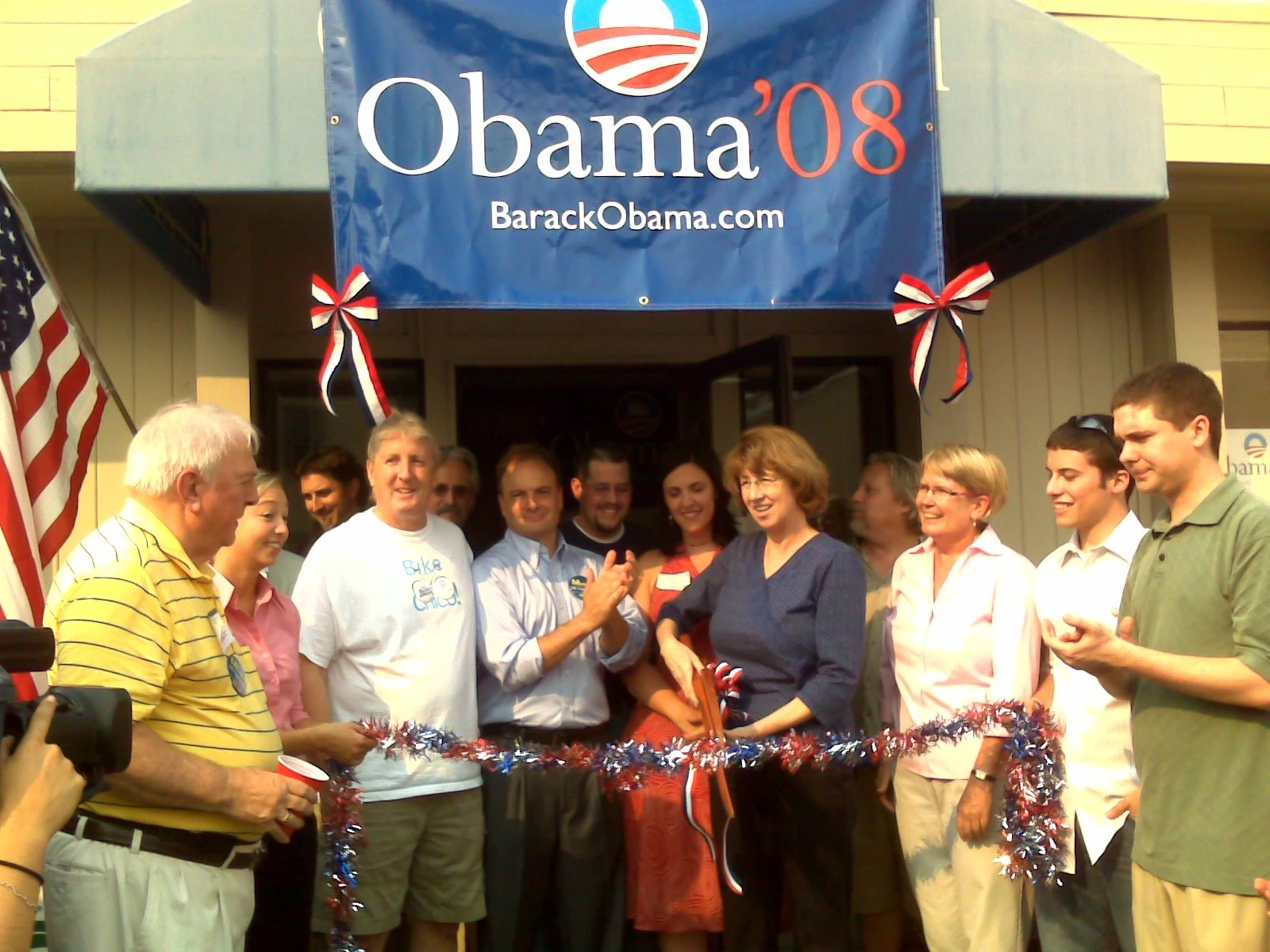
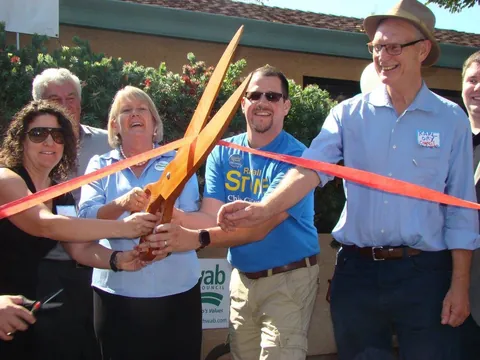
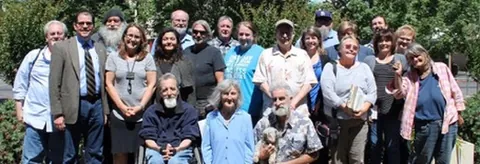
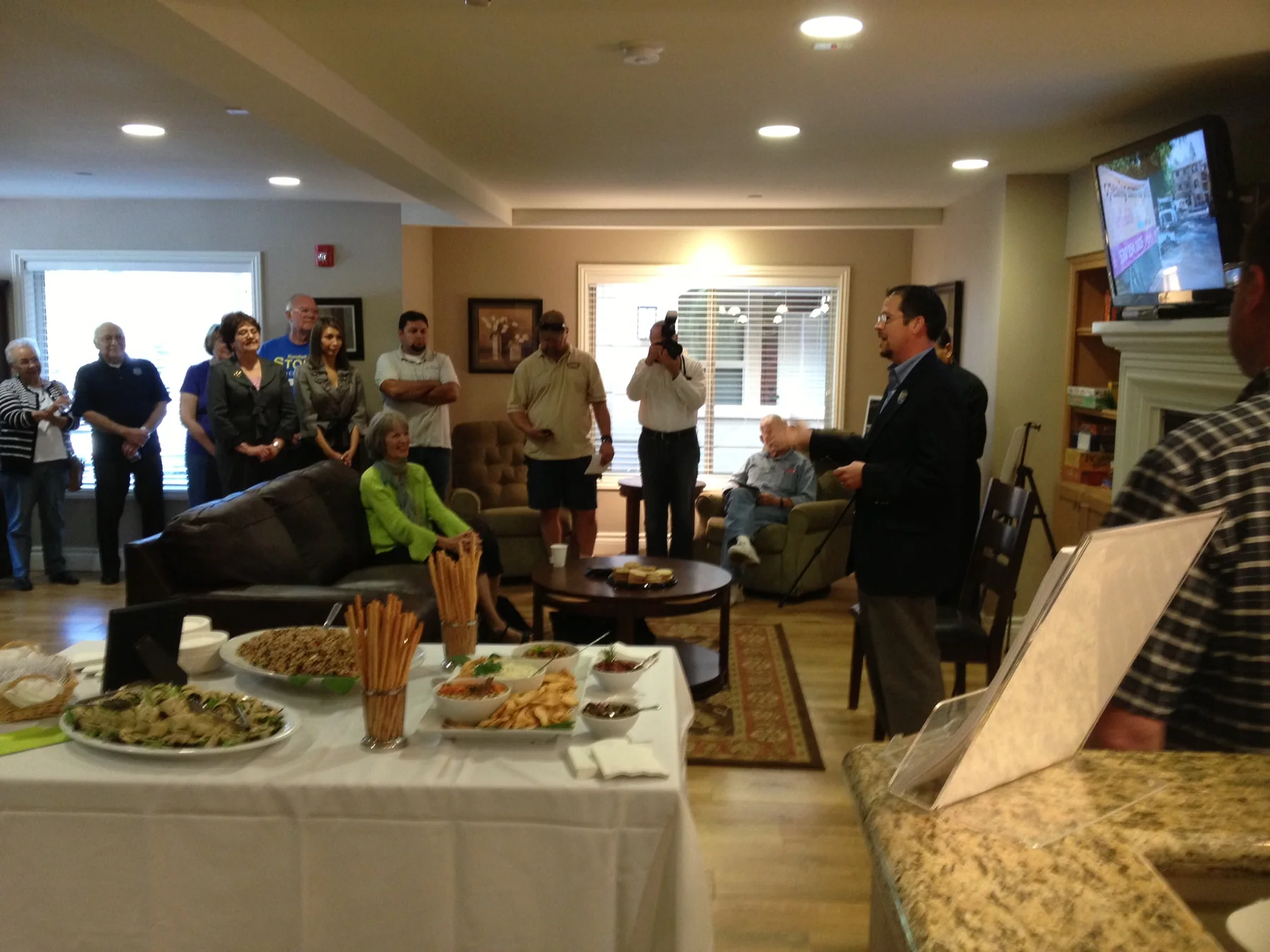
Democratic headquarters grand opening at 600 Main Street, Chico, July 2008. Randall Stone served as master lessee and IT lead and held Democratic Action Club leadership.
Contemporaneous reporting identifies Randall Stone, then 33, as chairman of the Democratic Action Club during the 2006 gubernatorial primary cycle.
Open source →Primary-season coverage identifies Randall as a DACC vice-chairman and records Randall and Krista Gallwitz competing for Clinton delegate positions while Obama activists sought their own delegate seats.
Open source →Reports more than 260 attendees at the 600 Main grand opening, describes the 3,800-square-foot headquarters, and identifies it as home to CD2 for Obama, DACC, Chico Democrats and other campaigns.
Open source →Randall identifies a previously supplied Action News television clip as primary-season coverage of his role in the 2008 presidential contest. The narrative is retained here, but the later Action News Now studio frame is deliberately not substituted for this earlier clip while the original video source is being documented.
Scott Huber’s published response to Randall Stone’s March 16 television criticism. Preserved because it independently documents the public rupture before the March 25 mayoral-removal vote.
Open source →Opposition archive
Criticism, satire and opposition material are preserved as artifacts, not adopted as factual descriptions.
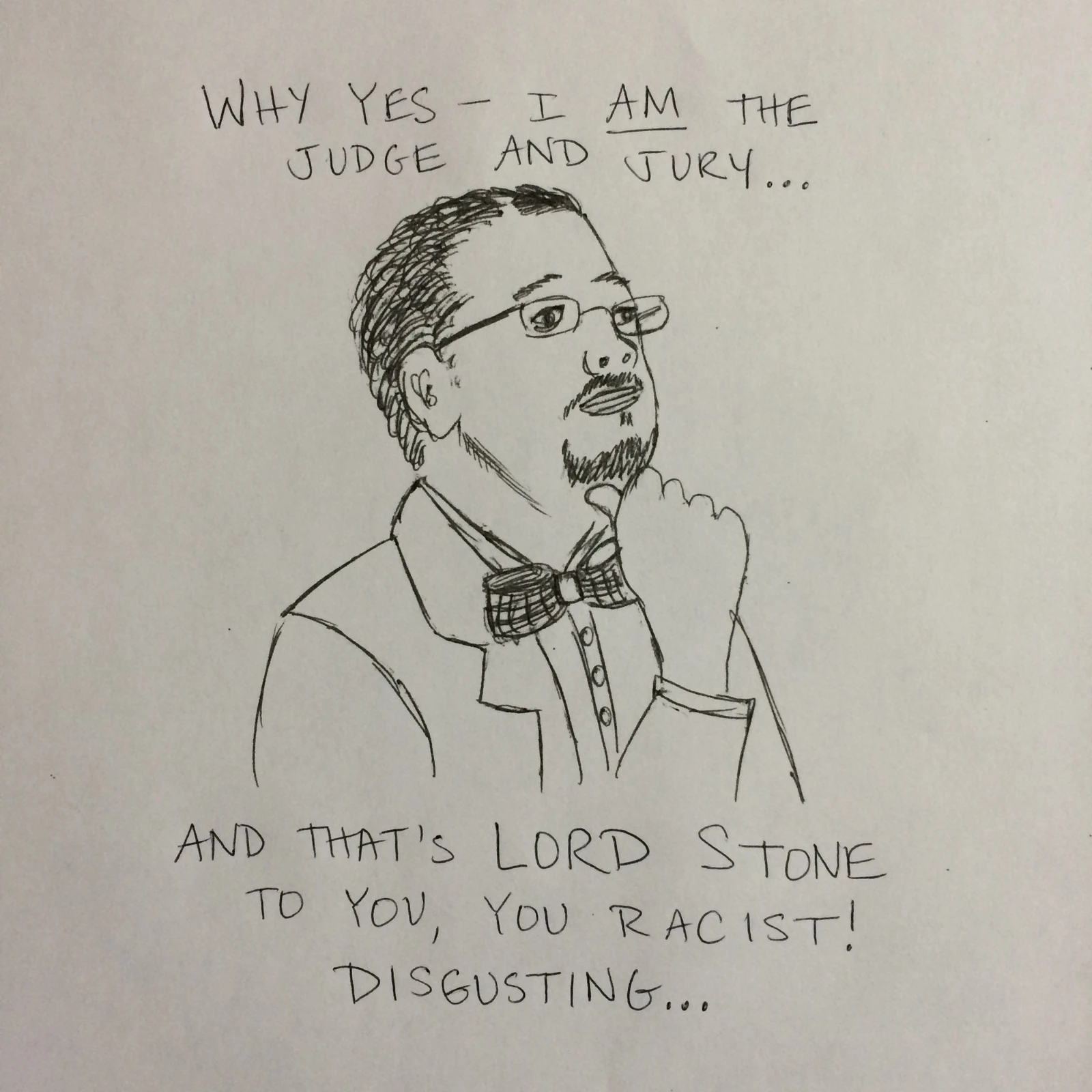
Local opposition cartoon depicting Randall Stone as “Lord Stone.” Date pending. Stone later joked that he nearly adopted it.
Opposition material is labeled by source and context. It also does not pretend a cartoon proves anything beyond the existence and tone of the criticism itself. That distinction is the point.
Recovered source photographs
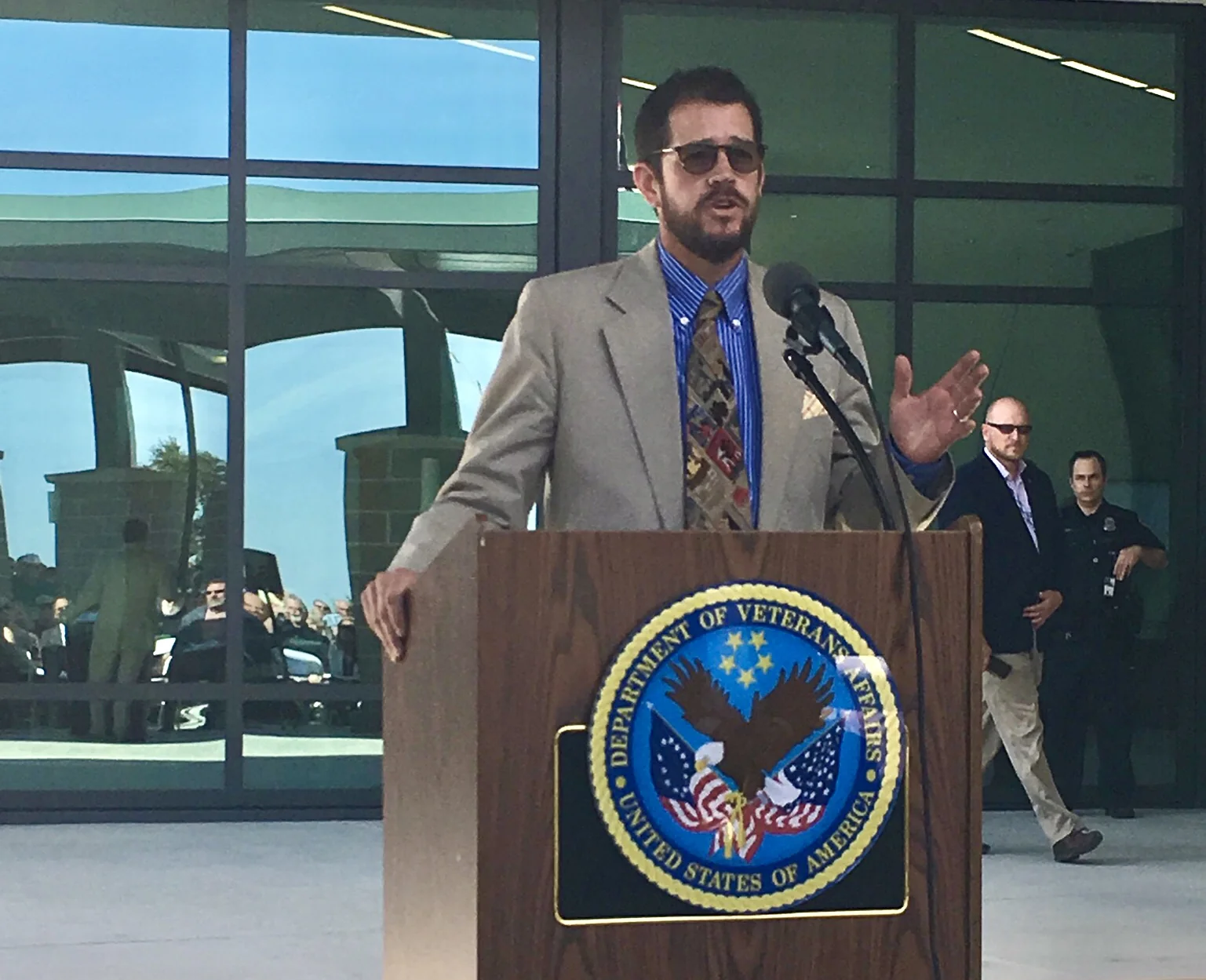
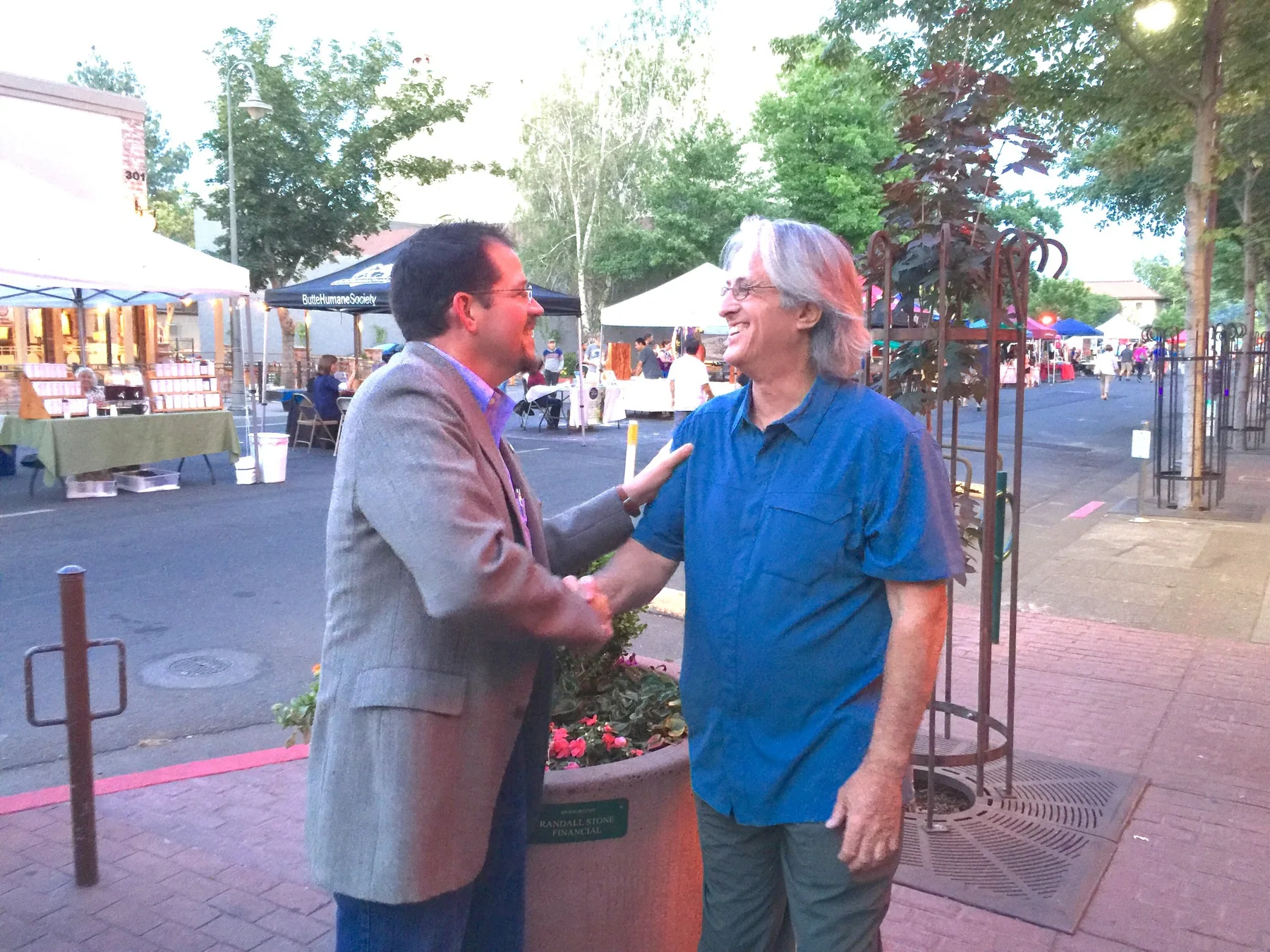
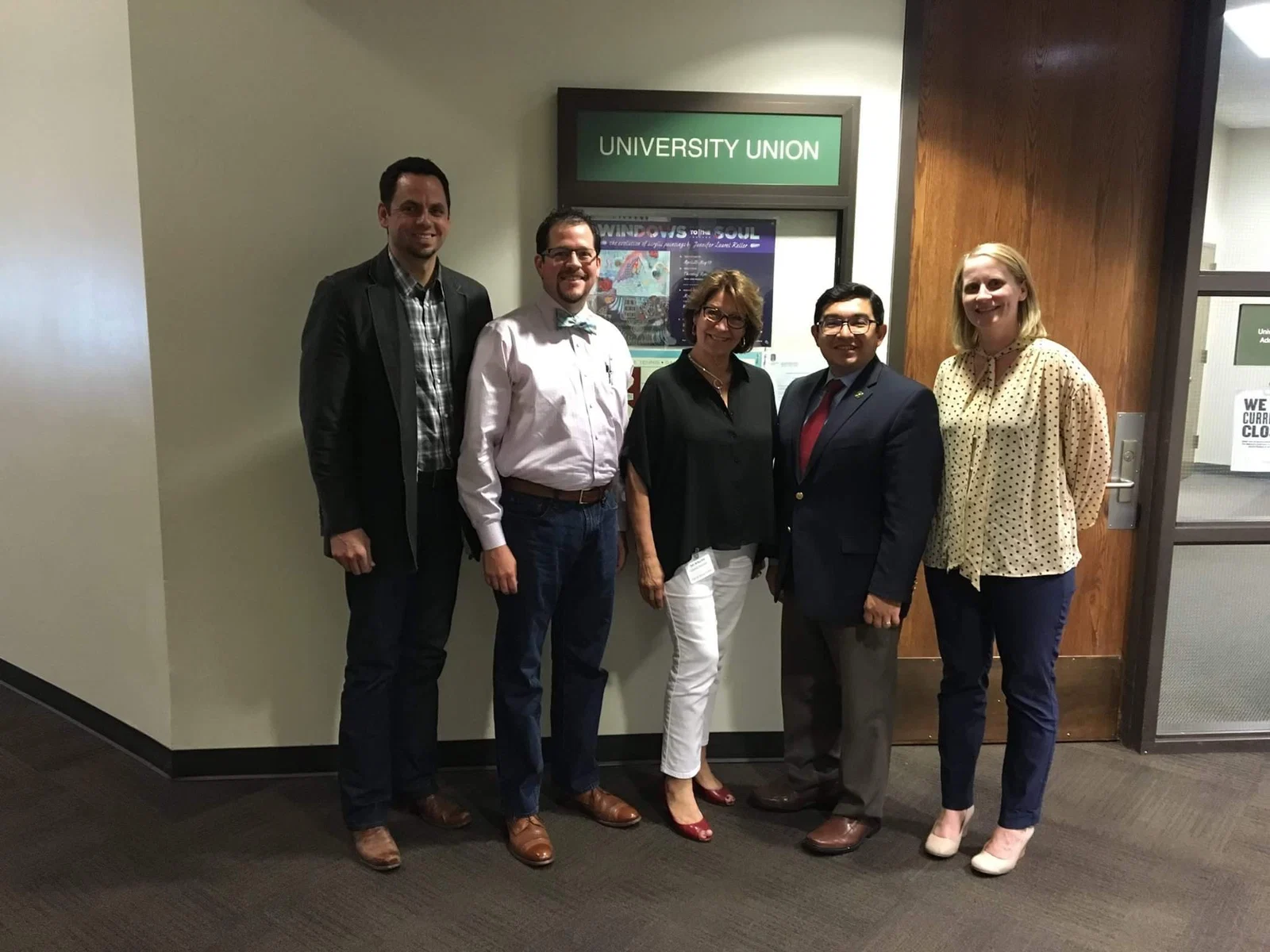
The source archive now separates three distinct Newsom encounters rather than repeating alternate frames from one event, and pairs those state relationships with other civic-advocacy settings.
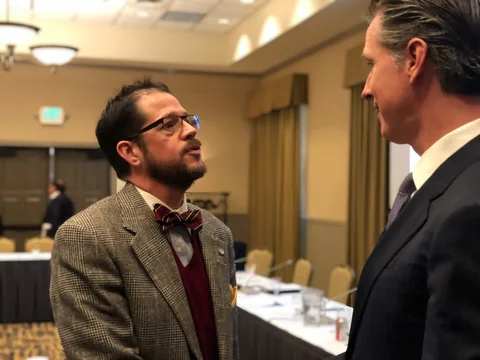
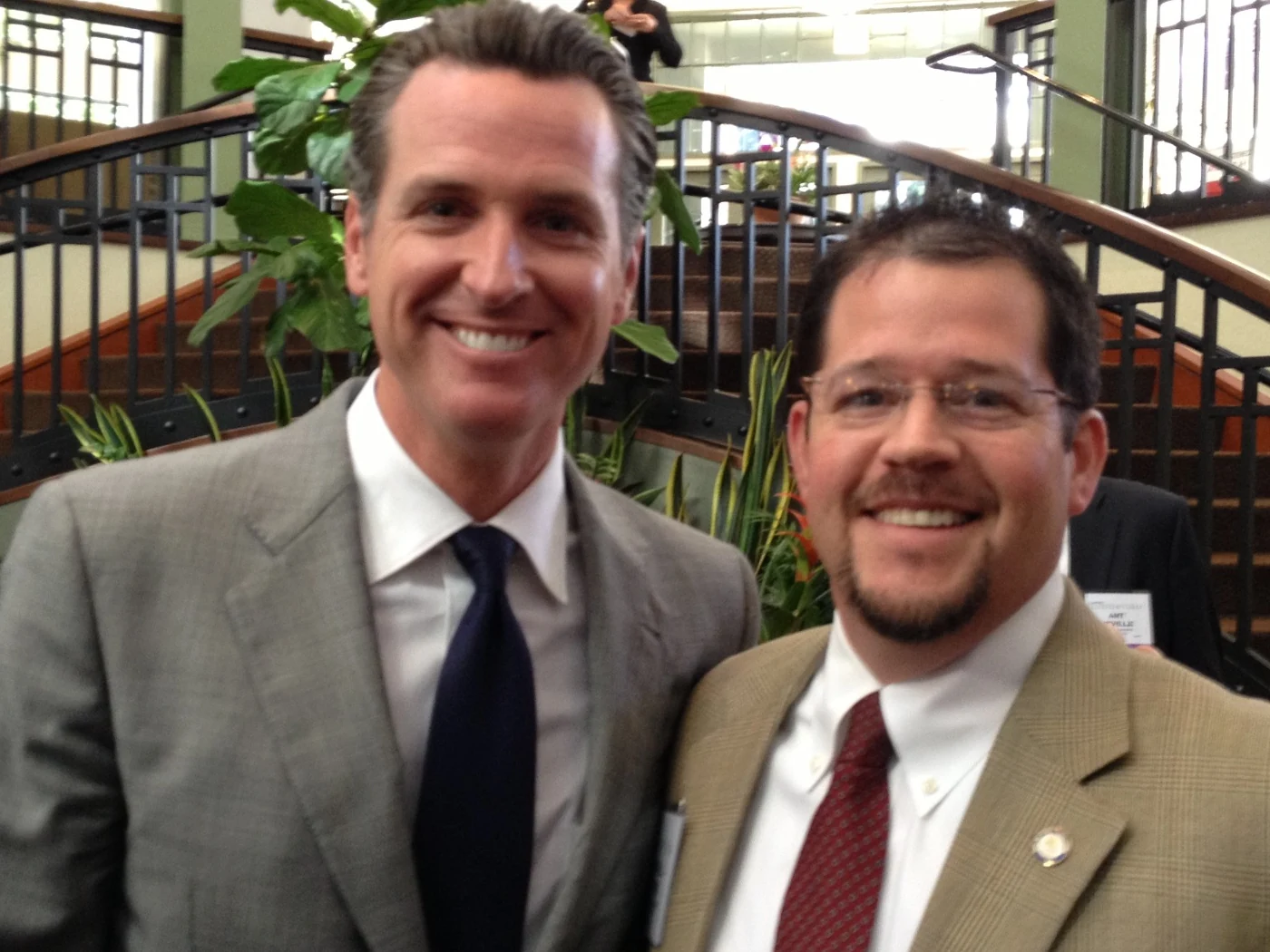
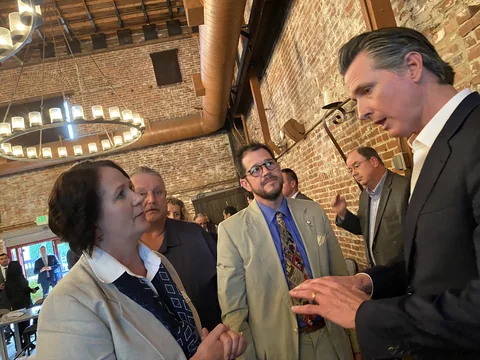
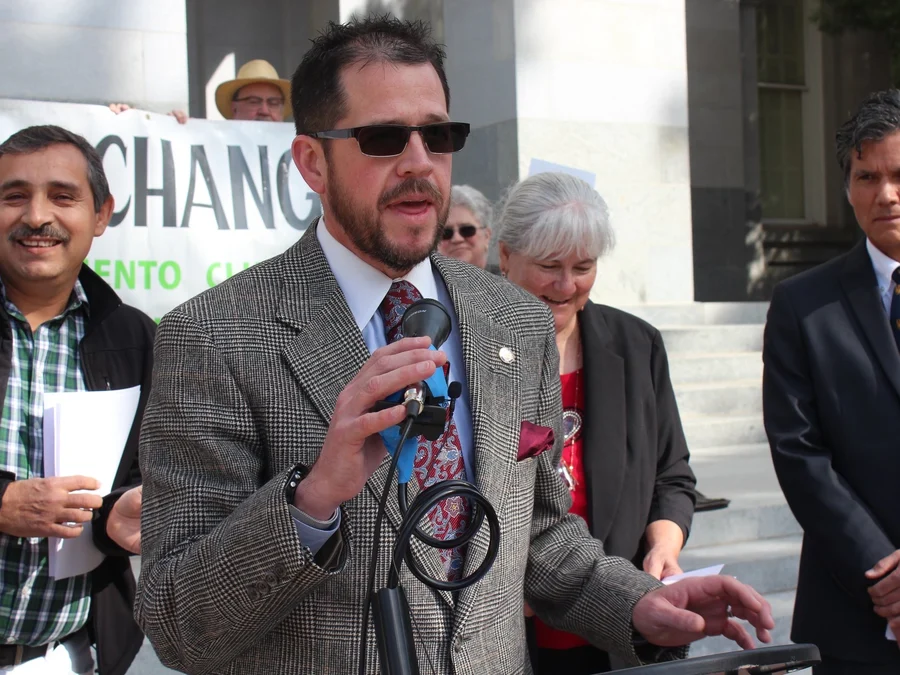
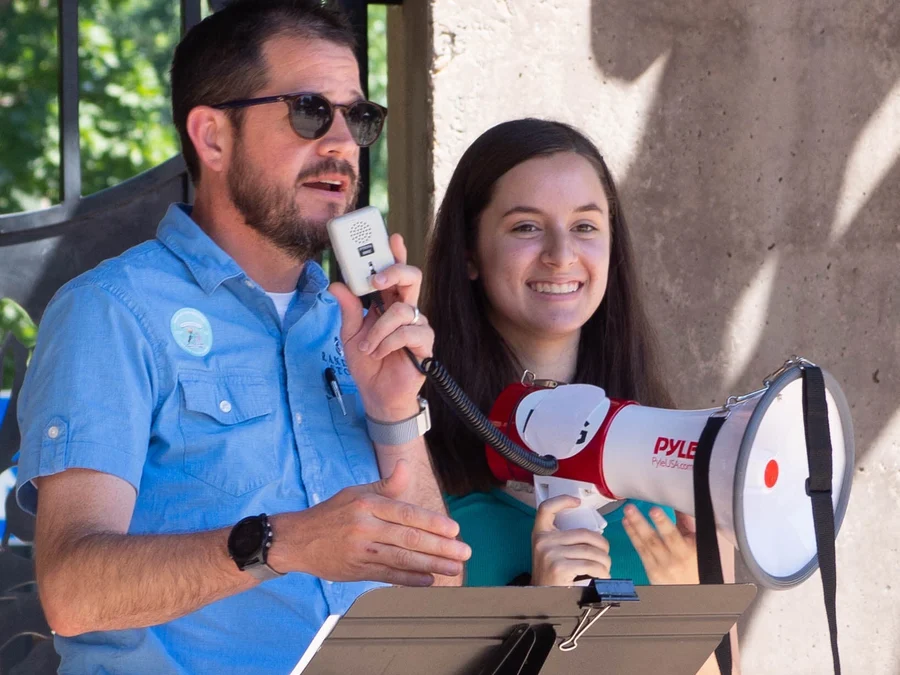
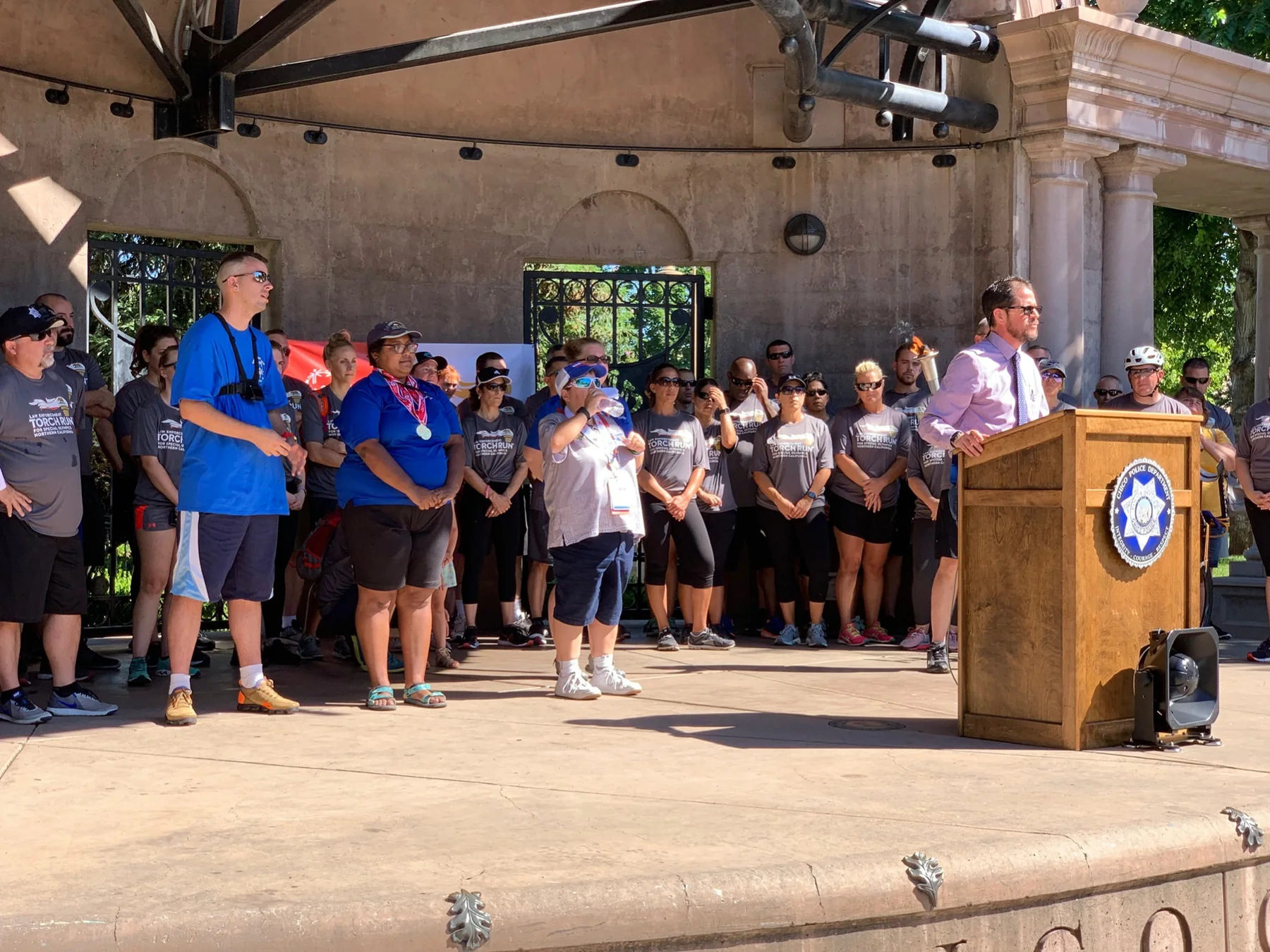
Record & coverage: Chico News & Review · “Message of togetherness” · July 5, 2018
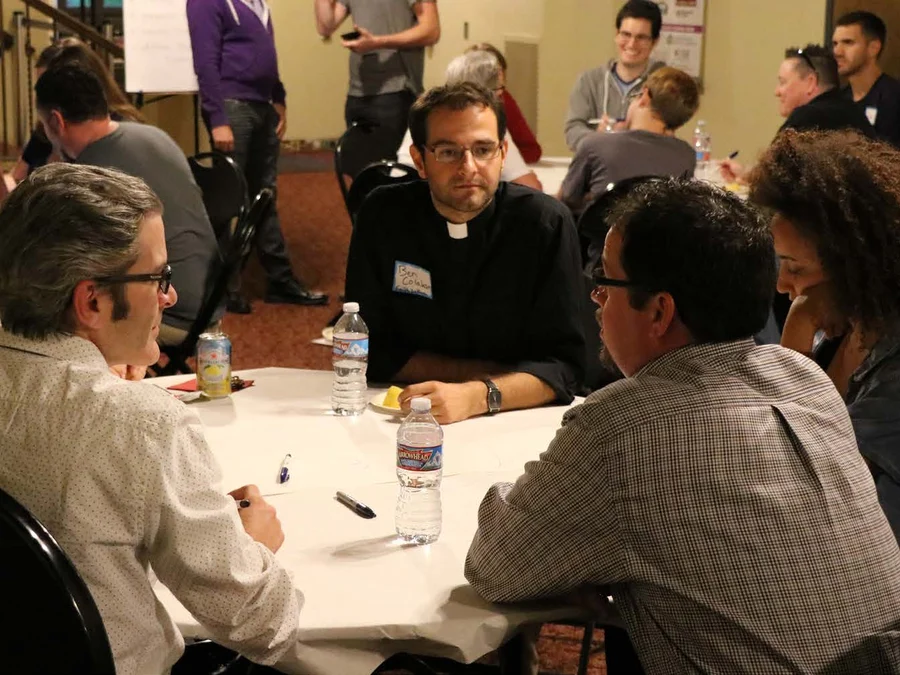
Visual public-service archive
Not every photograph needs to be a hero. Meetings, speeches, recognitions, community work and field visits
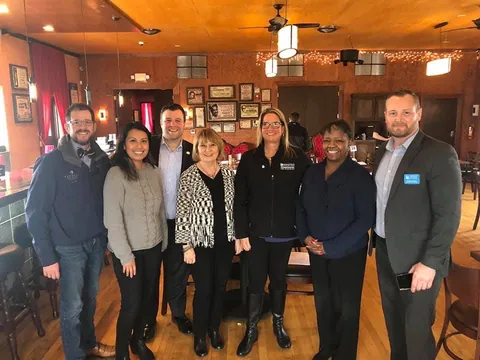
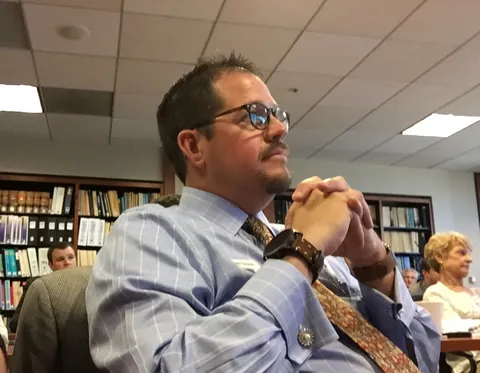
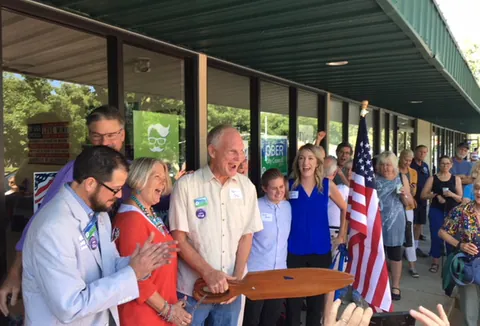
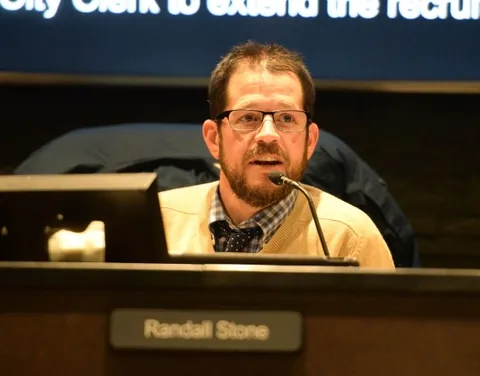
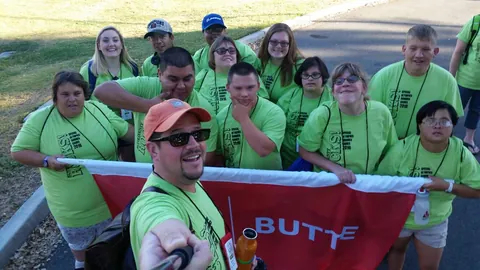
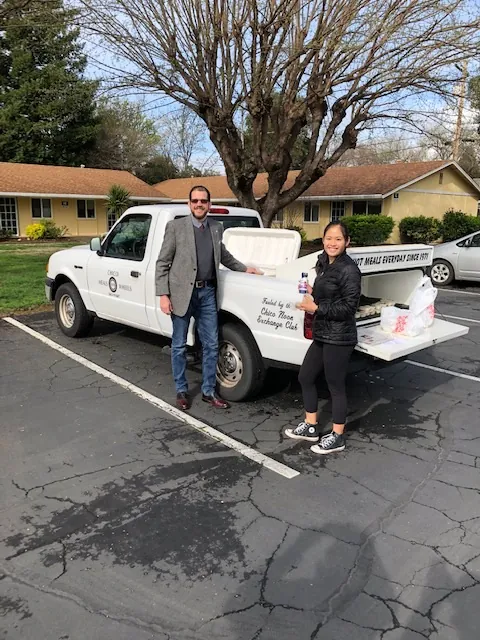
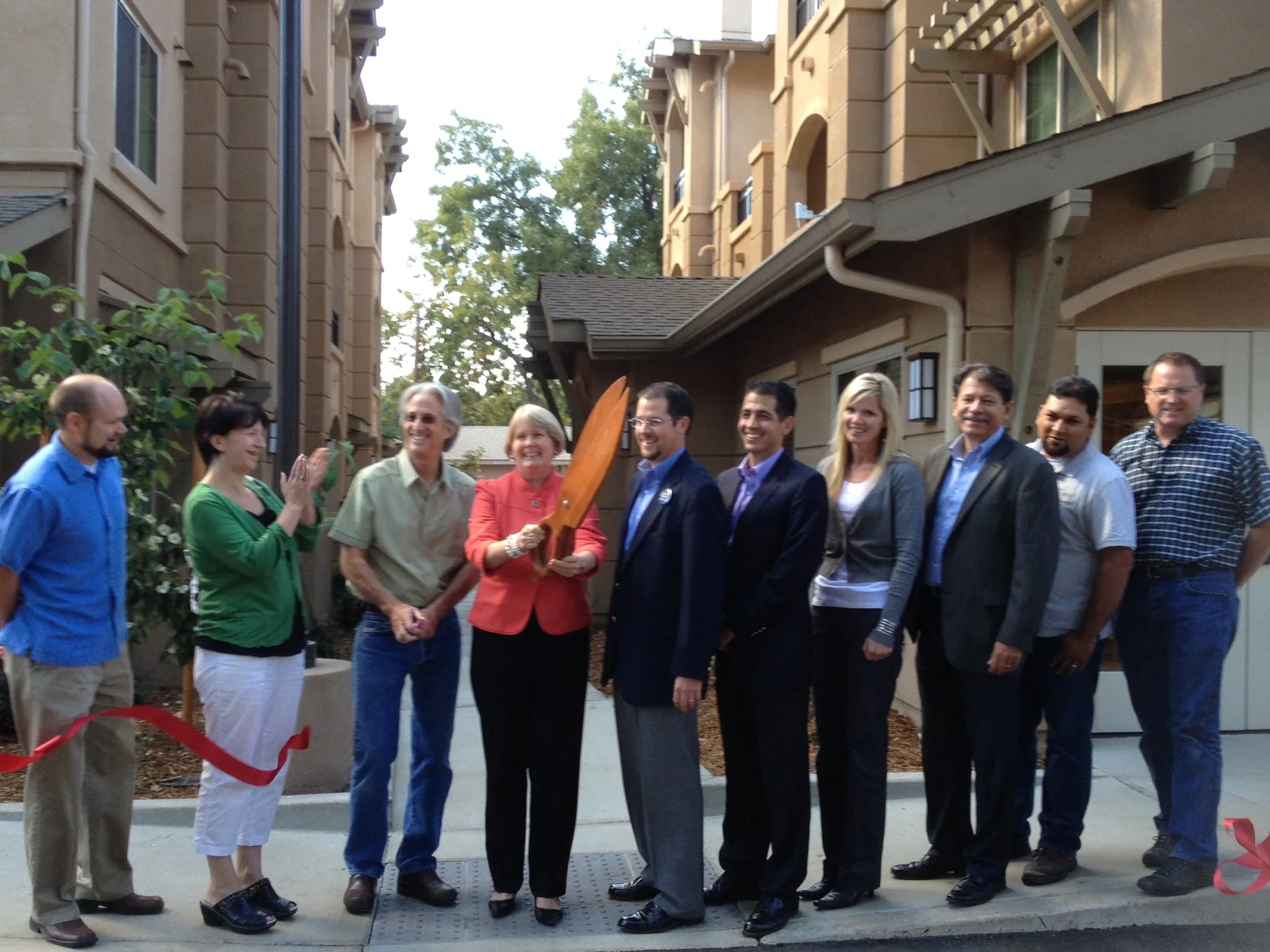
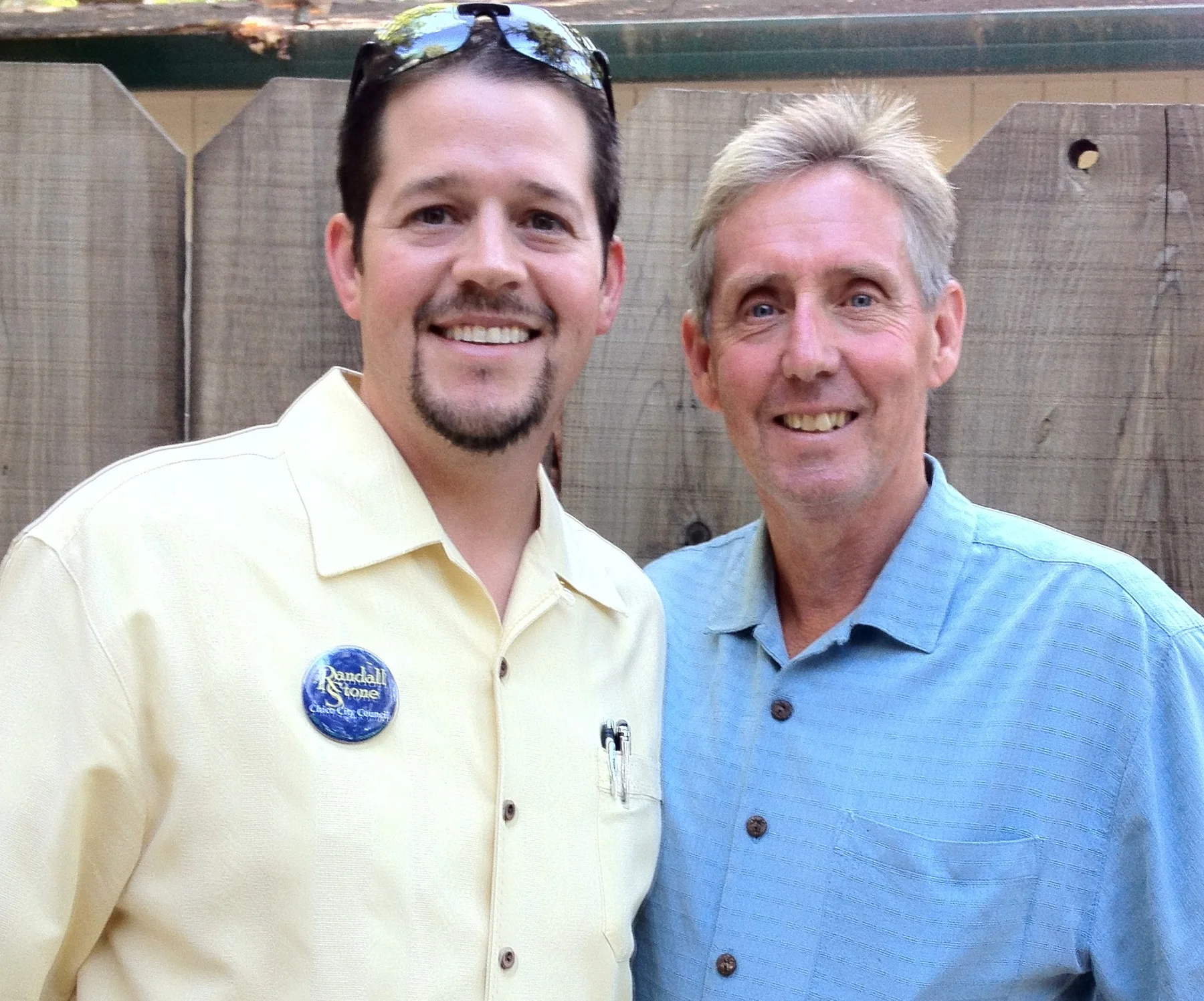
Randall Stone with the late Jim Walker at a 2012 campaign fundraiser at former Councilmember Tom Nickell’s home. Walker, then Chico’s outgoing Vice Mayor, had served on the Chico Area Recreation and Park District board and the Bidwell Park and Playground Commission. Professionally, Walker was a family nurse practitioner and PA-C. He was also a competitive triathlete; Stone recalls competing as a youngster in the same 1984 Rancho Seco triathlon that Walker, then in college, won. Walker publicly endorsed Stone’s first City Council campaign and died of brain cancer in 2022.
Campaign media archive
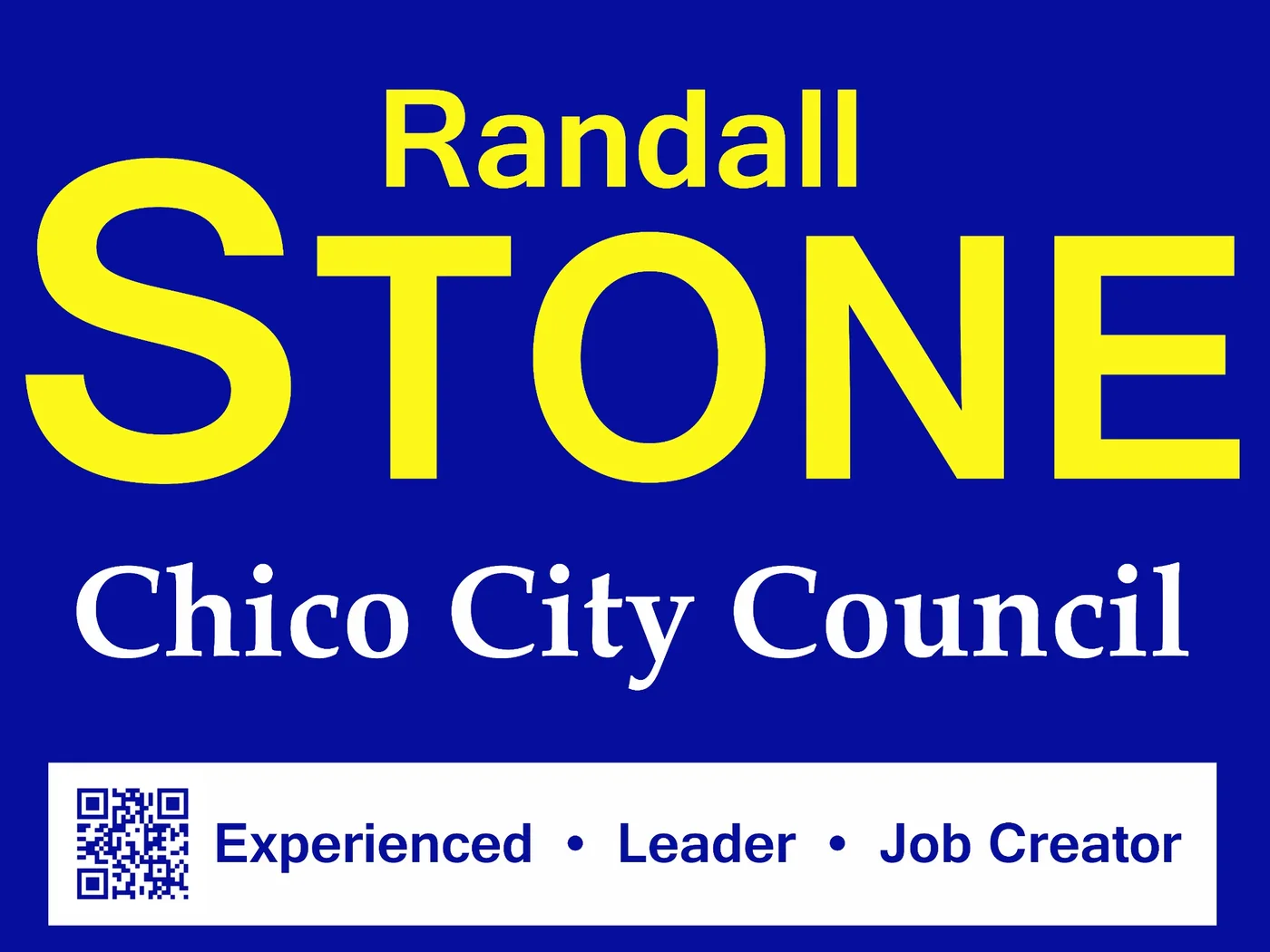
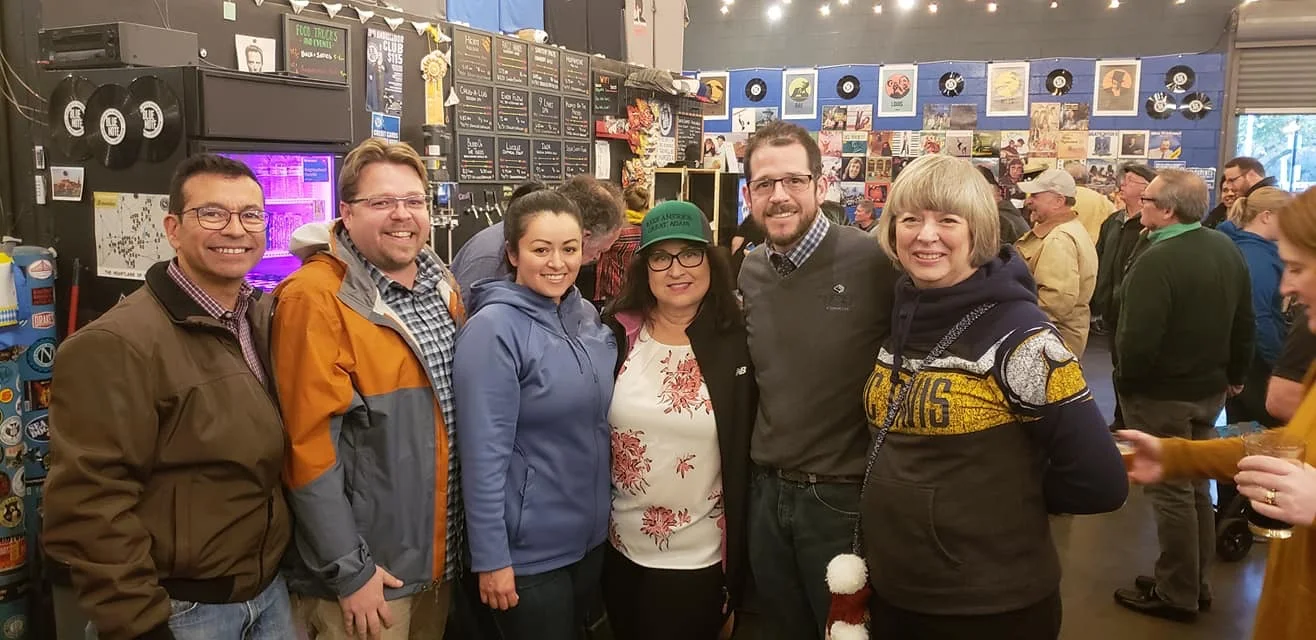
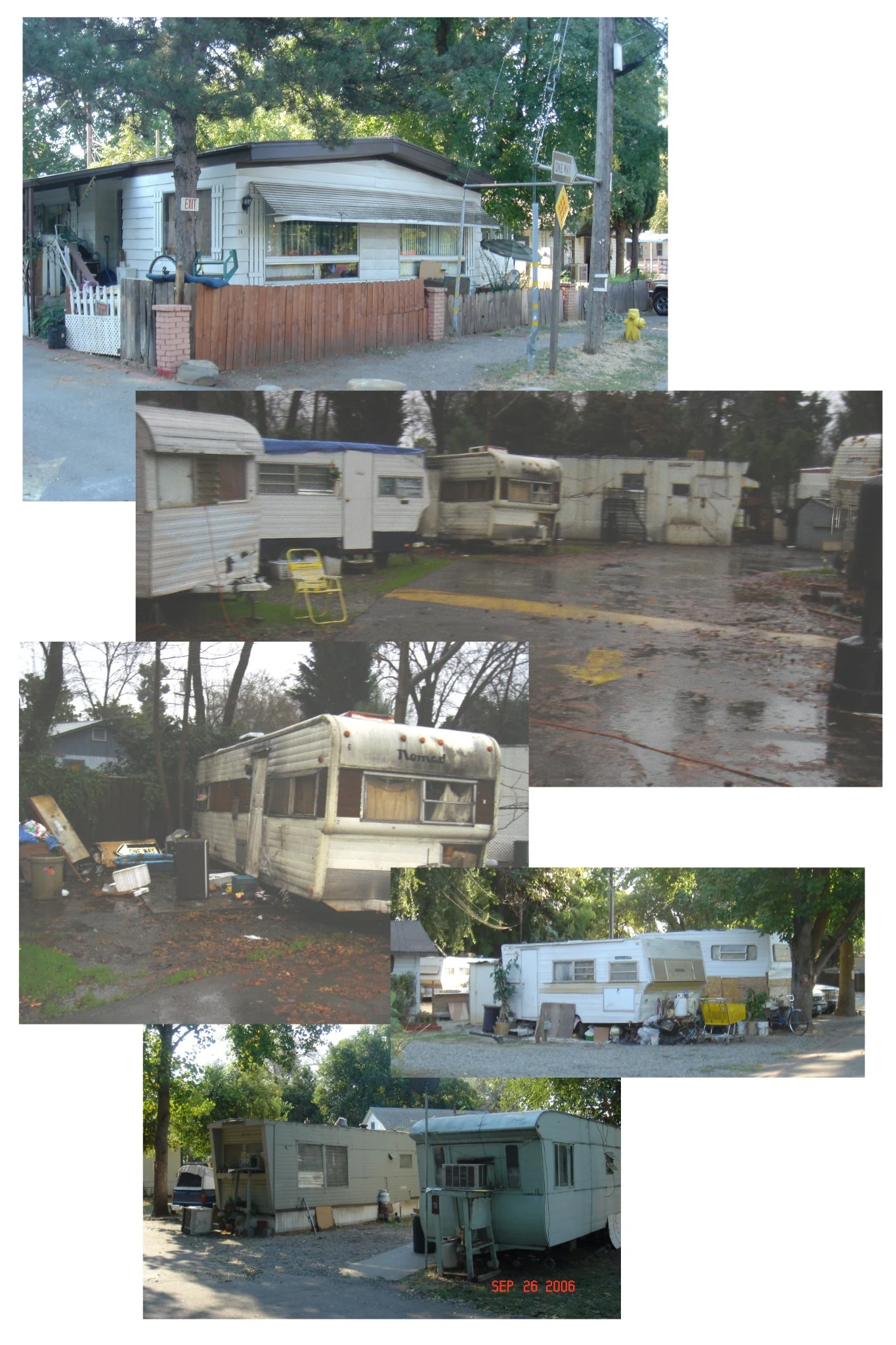
Original campaign files are retained here with literal labels and dates where known.

Council record recovery
The full source library below remains intact. This restored section pulls forward Council actions and original work that became buried or missing from an earlier public copy. For the curated chronology, use the Council Record & Primary Sources page.
Official text and history for the Camp Fire Housing Assistance Act.
Open official bill →Chico’s fight over AB 430, including the Council request to remove the city and Randall Stone’s objections involving local review, affordability and land-use authority.
Open source →The emergency demand to open a warming center during a freeze.
Open source →The Depot Park warming center in operation and the dispute over emergency responsibility.
Open source →The move toward a longer-term warming-center policy.
Open source →The city-funded cooling-center side of the extreme-weather program.
Open source →The Council’s expansion of Code Blue criteria to dangerous cold-rain and cold-wind conditions.
Open source →The actual coauthored article, restored directly rather than represented by an adjacent Western City link.
Read the article →Official City record for the special meeting, emergency declaration and related housing and emergency actions.
Open City record →Contemporaneous coverage of the emergency declaration and community-aid measures.
Open source →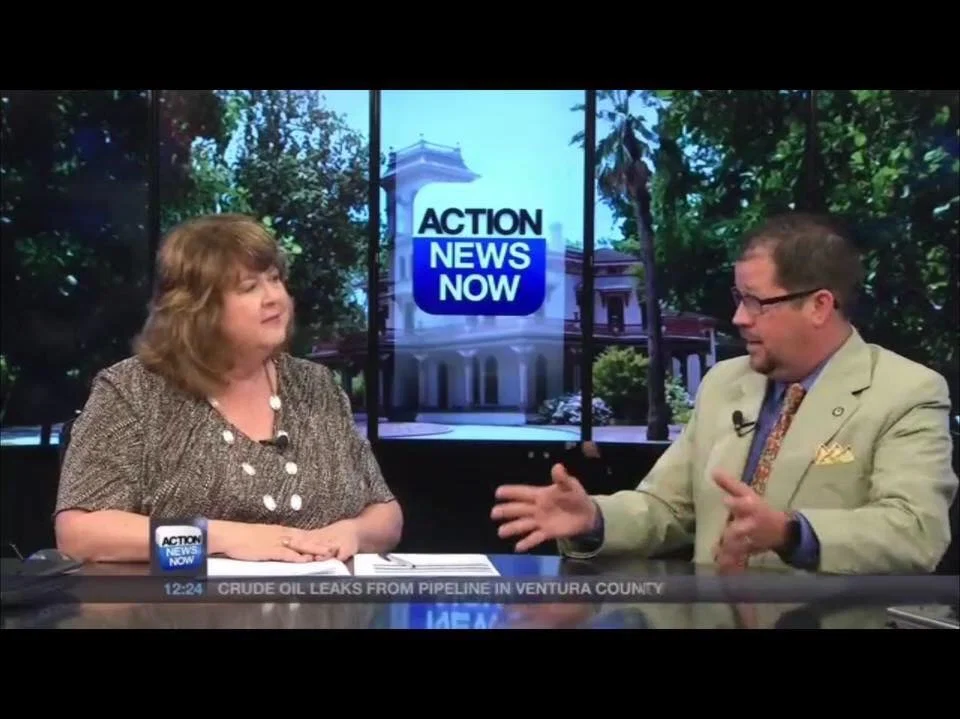
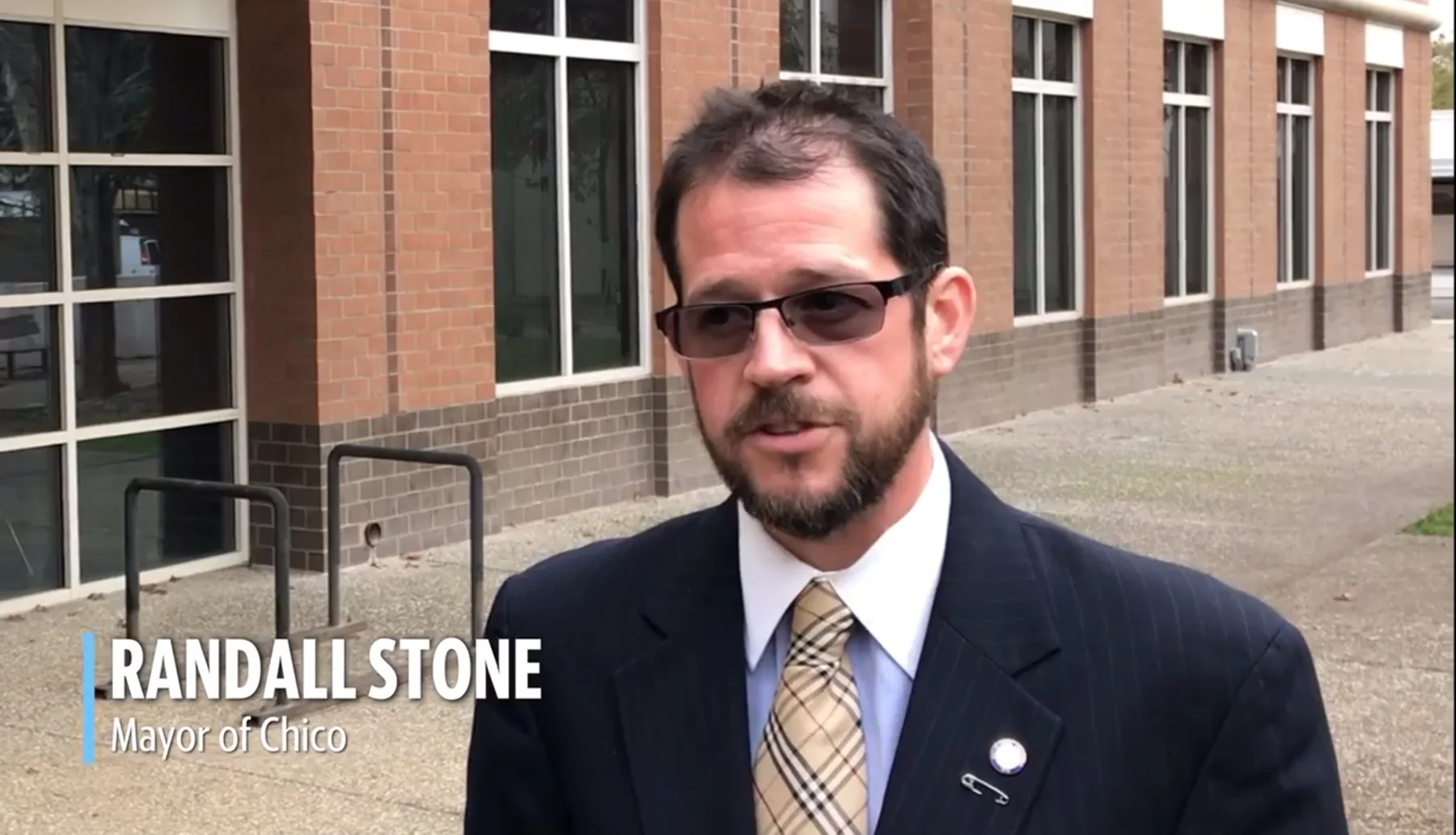
Action News Now interview frame with Randall Stone. Exact topic and date pending.
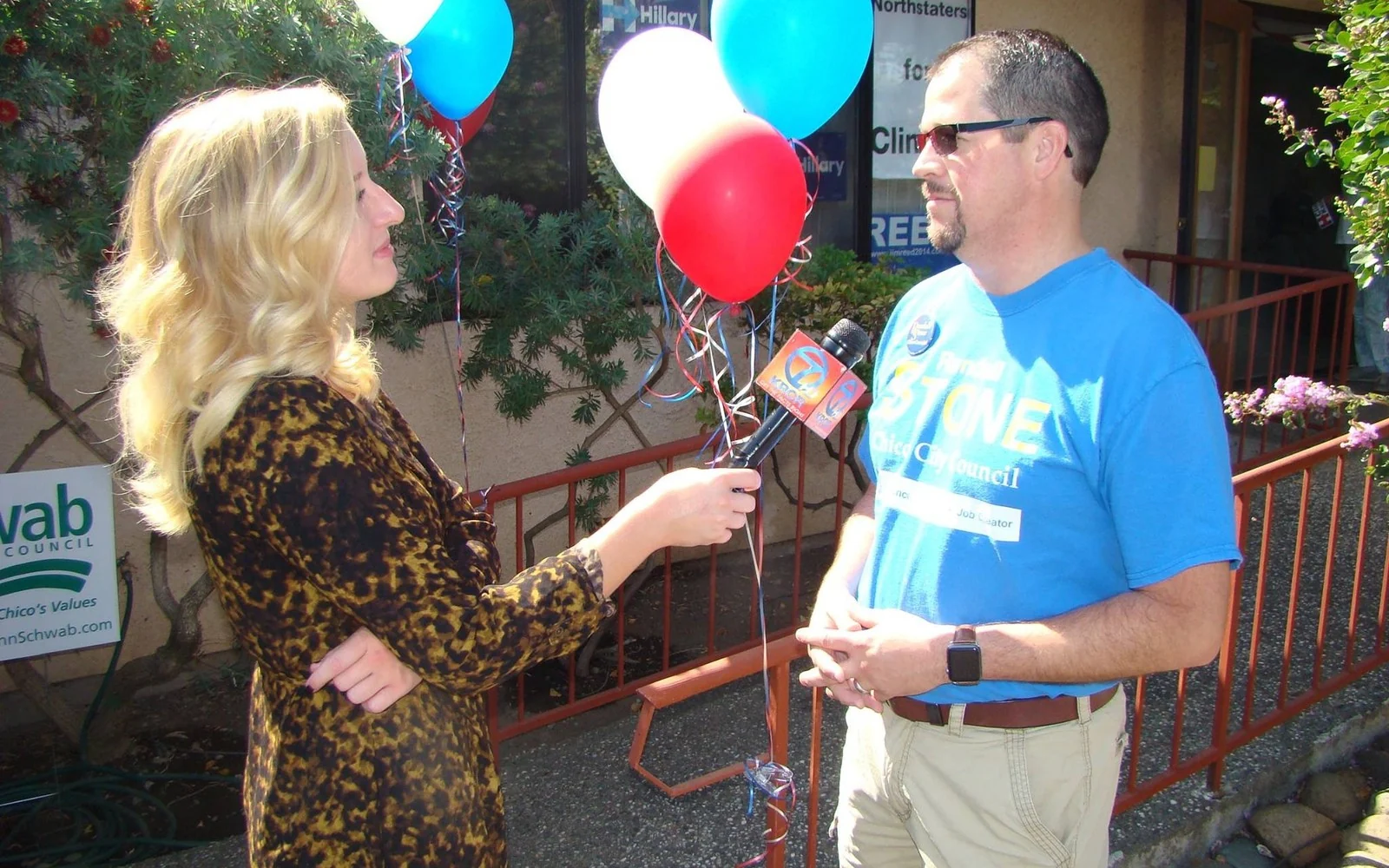
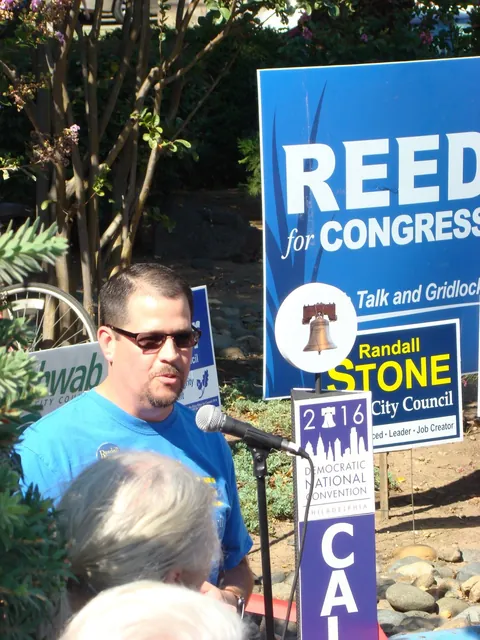
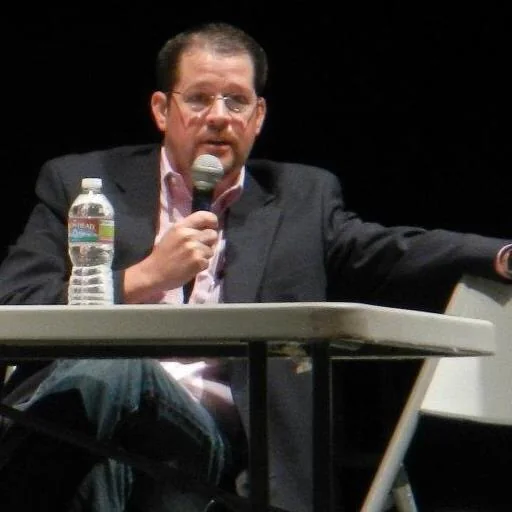
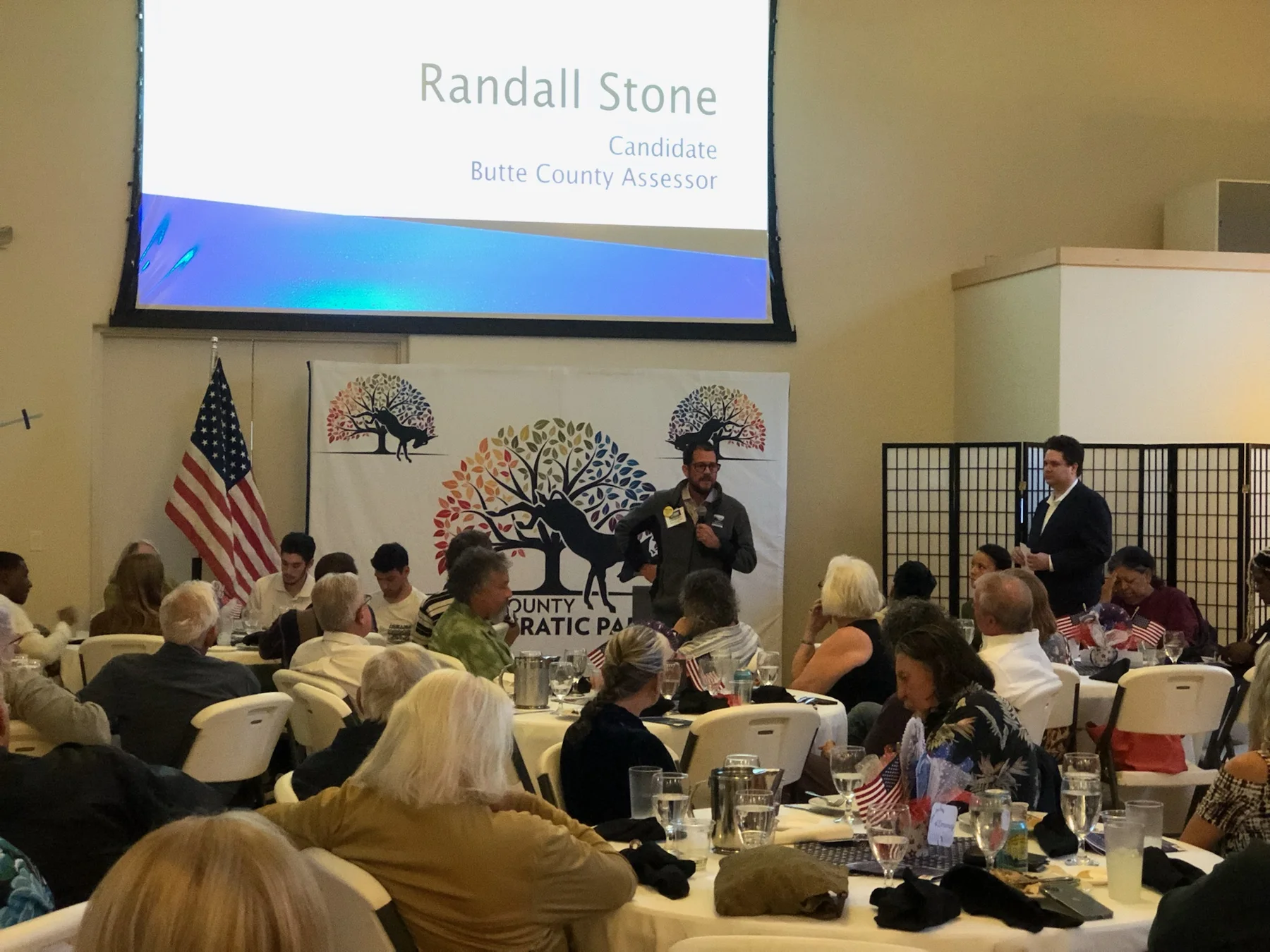
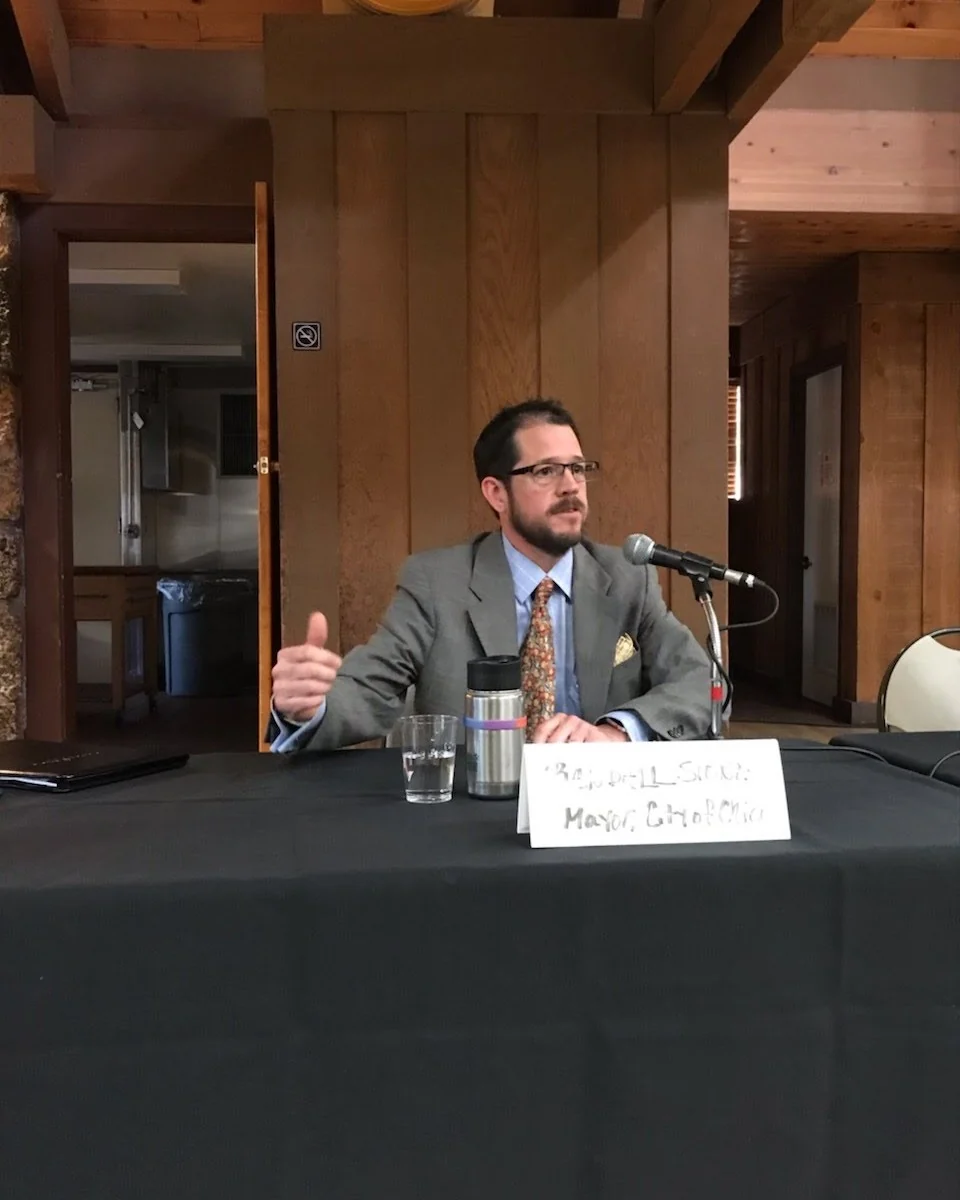
Randall Stone interviewed at the August 27, 2016 opening of the Butte County Democratic campaign headquarters on Rio Lindo Avenue while running for reelection to the Chico City Council.
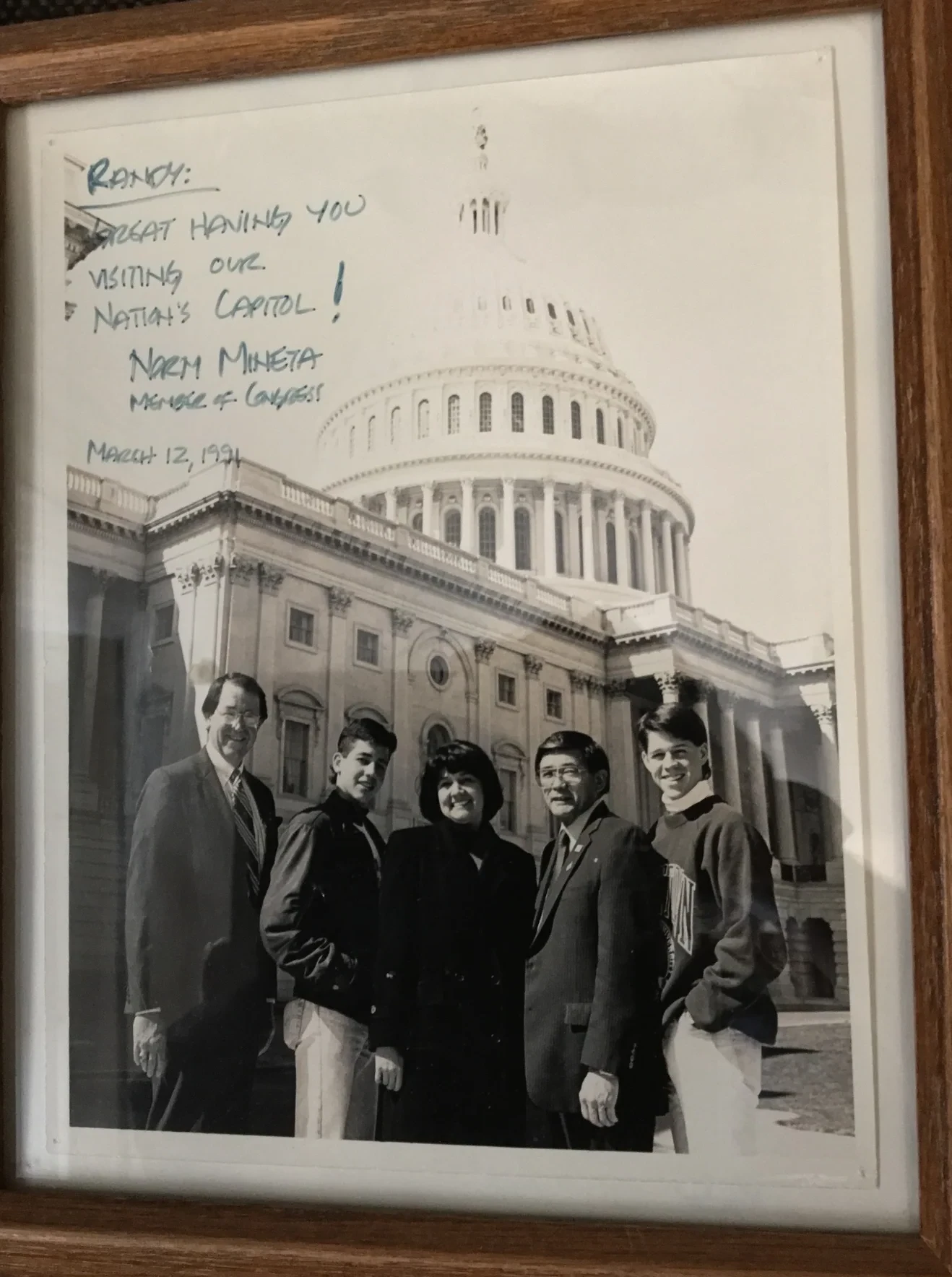
Randall Stone with Norman Mineta at the U.S. Capitol, March 12, 1991. The framed photograph includes Mineta’s handwritten note.
Public source library
Publisher summaries are concise archive notes, not substitutes for the original reporting. Critical coverage stays in the library too. Records become less useful when the archivist only preserves flattering days.
A mayoral profile and interview published during the first months of Camp Fire recovery. The page is retained as a direct source even though the publisher currently limits reliable automated access to the full text.
Open source →Reports that Mayor Randall Stone placed renewed consideration of a police community advisory board on the council agenda, emphasizing transparency and community engagement.
Open source →Documents the special council meeting ordered by Mayor Stone and councilmembers Karl Ory and Scott Huber to address emergency warming-center strategy and public input.
Open source →A twelve-minute interview with Mayor Stone about the near-zero vacancy rate, displacement, housing production, and Chico’s post-fire capacity.
Open source →National reporting on housing, infrastructure, traffic, municipal capacity, and uncertainty over disaster funding as Chico absorbed displaced residents.
Open source →A disaster-housing update that points readers to the Chico mayoral interview and summarizes post-Camp Fire housing conditions and potential responses.
Open source →Examines secondary displacement, evictions, legal limits on city action, permit-fee reductions, and affordable-housing requirements.
Open source →The 2019 city list identifies Chico and Mayor Randall Stone among participating Extra Mile Day communities.
Open source →Reports the council’s 5–2 direction to draft a single-use plastic-bag ordinance and records Randall Stone among the affirmative votes.
Open source →Describes a state partnership with mayors, including Chico, to examine surplus public parcels for expedited affordable-housing development after the Camp Fire.
Open source →A broad account of trauma, housing pressure, political polarization, recall activity, and Chico’s post-fire civic climate. Preserved as contemporaneous public framing, not adopted wholesale as interpretation.
Open source →Coverage of the 5–2 council vote banning flavored-tobacco sales. Companion reporting identifies Mayor Stone among the affirmative votes.
Open source →Preserves reporting on debate over a possible emergency curfew during public-safety power shutoffs. The article covers a proposal considered during the period.
Open source →A regional brewery retrospective retained as context for the Santa Clara Valley Brewing appearance and family-history story. Its precise connection to an individual photograph remains to be cataloged.
Open source →Reports criticism of a sarcastic social-media post during the opening weeks of the COVID-19 emergency. Contemporaneous coverage of the public controversy.
Open source →Reports the first meeting of the reconstituted council, emergency housing measures, accessory-dwelling-unit fee reductions, and Randall Stone receiving the mayor’s gavel.
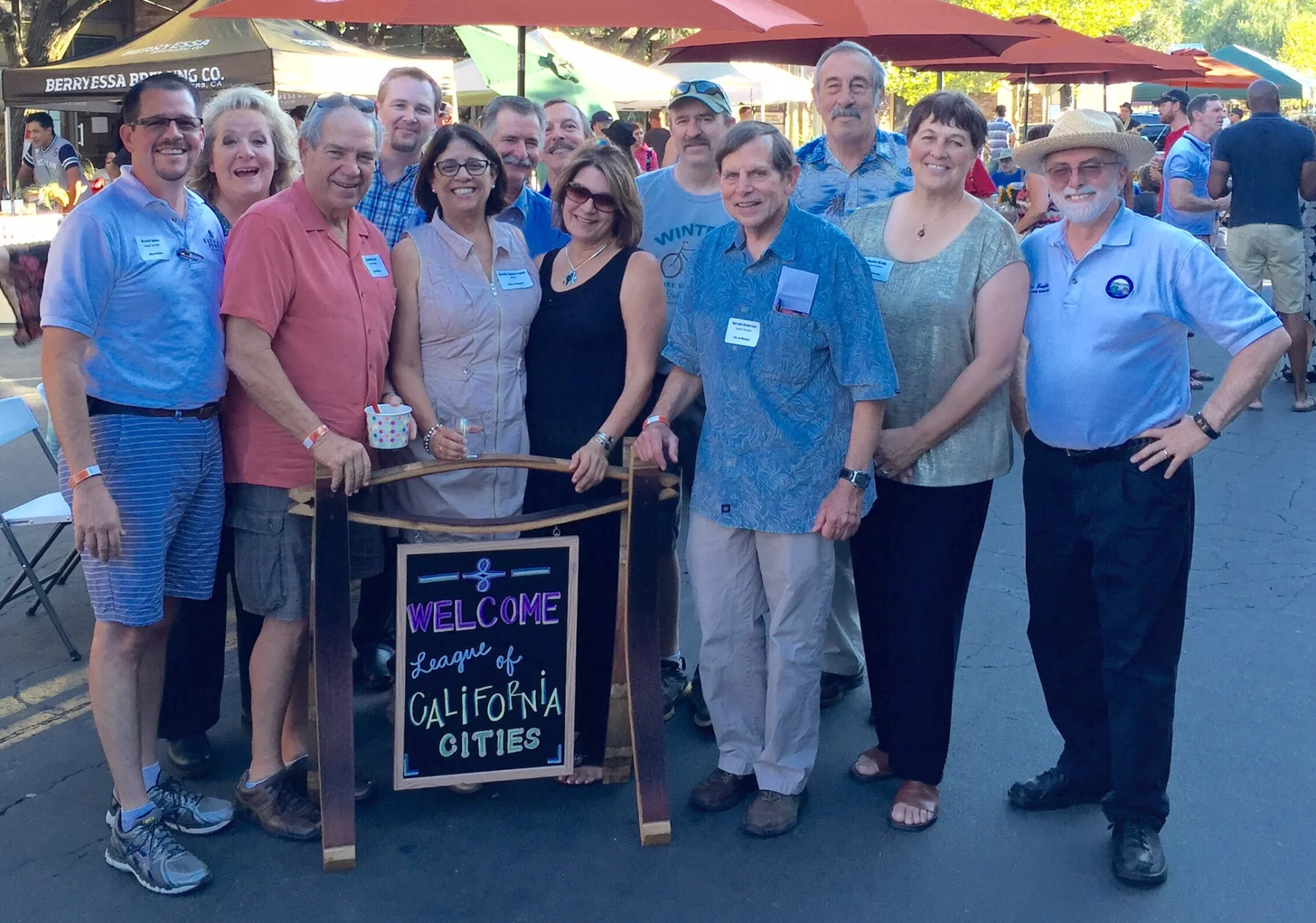
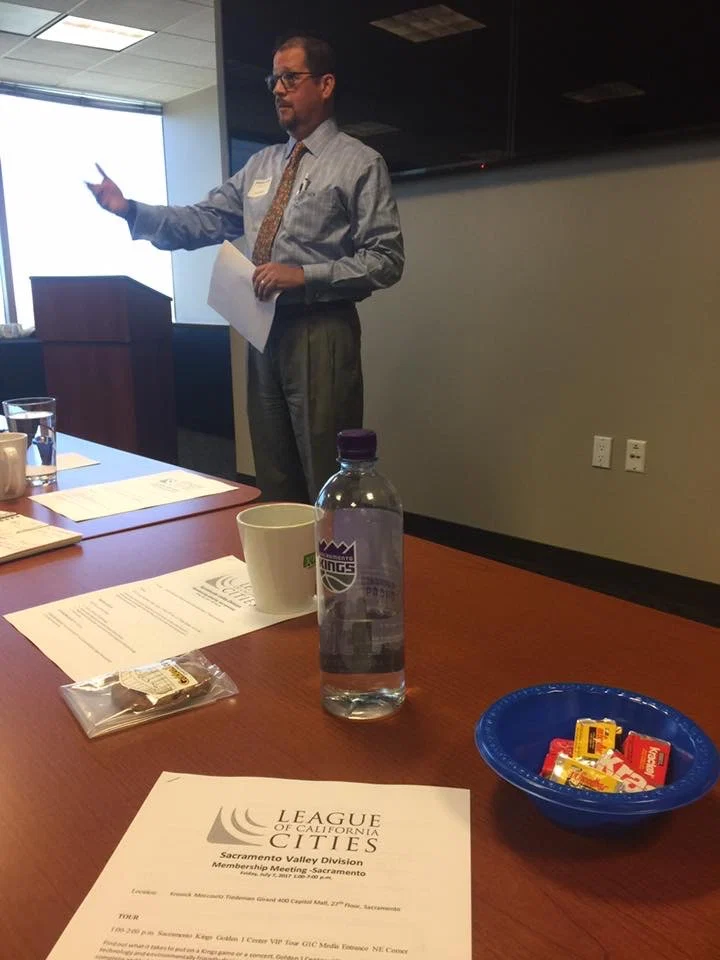
Open source →A League of California Cities regional gathering retained for the record of municipal collaboration. Full metadata and Randall Stone’s specific role remain pending publisher access.
Open source →Six-month recovery reporting retained as context for the continuing regional housing shortage. The publicly exposed page metadata does not reliably identify a Randall Stone appearance.
Open source →A Forum discussion with Mayor Randall Stone, NPR correspondent Kirk Siegler, and Camp Fire survivor Jeraline Ramsey about displacement, housing, services, and Chico’s capacity.
Open source →A bipartisan letter from 231 mayors urging Congress to extend the federal Solar Investment Tax Credit. The published signatory list includes Mayor Randall Stone of Chico.
Open source →A recall-era statewide political story retained as public framing. The exact Chico passage and relationship to Randall Stone remain pending full-text access.
Open source →Emergency-preparedness context. Western City also published Randall Stone and Dana Carey’s September 2019 wildfire-preparedness article; that authored work is now linked directly in the restored Council-record section above.
Open source →Documents a $3.25 million recovery commitment and includes Mayor Stone’s support for housing and small-business recovery assistance.
Open source →A federal institutional report supplied for the archive. The exact page, event, or Randall Stone reference remains to be identified before the document is used to support a specific claim.
Open source →Statewide recall-era coverage retained as evidence of the political environment in which local recall efforts were discussed.
Open source →Reports Mayor Stone opening the first meeting of Chico’s Commercial Cannabis Advisory Committee and acknowledging the issue’s political intensity.
Open source →Connects wildfire, fossil-fuel production, housing disruption, and demographic change, quoting Mayor Stone as a signatory to a climate-policy letter.
Open source →Contemporaneous reporting on Chico’s fiscal condition during Randall Stone’s council service. It is included as institutional context, not attributed to Stone unless the underlying article or public record supports the attribution.
Open source →Documents Randall Stone being seated as a newly elected Chico City Councilmember and preserves the beginning of the eight-year council record.
Open source →Reports the council’s 5–1 climate-emergency and fossil-free-goal vote, with Mayor Stone among the affirmative votes.
Open source →Reports continuing FEMA housing problems, secondary displacement, traffic pressure, and Chico’s request for infrastructure mitigation.
Open source →Reports that the council chamber was cleared and ChicoSol journalists were barred while the council voted 4–3 to continue considering a sit-and-lie ordinance. Randall Stone opposed proceeding and described the ordinance as political theater and a waste of time.
Open source →A direct local report on Mayor Randall Stone’s January 2020 State of the City address. The publisher page is preserved even though reliable automated access to the full article is currently restricted.
Open source →Reports that a proposed PG&E-outage curfew stalled after public opposition. Mayor Stone objected to rushing an emergency ordinance, warned about disproportionate impacts on workers, lower-income residents and people of color, and directed a broader ad hoc review.
Open source →Documents the 4–3 passage of the sit-and-lie ordinance amid public protest and legal debate after Martin v. Boise. Randall Stone, Ann Schwab and Karl Ory opposed the measure.
Open source →Reports the environmental lawsuit challenging Stonegate’s approval and its greenhouse-gas consistency with Chico’s general plan. Stone described the prior council’s late-night approval as occurring at the eleventh hour.
Open source →Documents a youth-led immigration-policy protest attended by Mayor Stone. He discussed his grandfather’s arrival from Mexico as an asylum-seeker, exploitation in the housing market and a proposed landlord fee to support code enforcement against substandard housing.
Open source →Preserves reporting that raised possible First Amendment concerns over public officials blocking constituents on Facebook. It is cataloged as an allegation and legal controversy, not as a judicial or administrative finding.
Open source →Reports an approximately $8 million city budget surplus after the Camp Fire. Mayor Stone cautioned against using one-time revenue for permanent staffing costs and noted that additional property-tax calculations could change the final figure.
Open source →Documents adoption of Chico’s district-election ordinance under the California Voting Rights Act timeline. Mayor Stone dissented from waiving the ordinance’s second reading during the final deadline meeting.
Open source →A detailed 2020 council-candidate Q&A preserving Stone’s first-person positions on housing affordability, renter protections, public safety, climate policy, syringe waste, police oversight, COVID-era business support and homelessness.
Open source →A CN&R archive item supplied for the public record. Its exact author, publication date and subject could not be reliably retrieved, so the site preserves the direct link without guessing at the praise or criticism behind the headline.
Open source →Documents newly elected Councilmember Randall Stone’s police ride-along during a violent incident, including his firsthand observation of emergency response, officers drawing weapons and the practical conditions faced by patrol officers.
Open source →Tracks the November 2012 vote count as Randall Stone widened his lead for the fourth and final City Council seat, preserving the electoral beginning of his eight-year council service.
Open source →Outgoing Vice Mayor Jim Walker publicly endorsed Randall Stone and Tami Ritter for Chico City Council.
Open source →Former Councilmember Tom Nickell publicly endorsed Randall Stone in the 2012 City Council election.
Open source →Former Councilmember and Vice Mayor Tom Nickell publicly endorsed Randall Stone for reelection in 2016.
Open source →Campaign-finance reporting lists then-Councilmember Andy Holcombe contributing $500 to Randall Stone’s 2012 campaign.
Open source →Campaign video archive
The recovered campaign-video stills include Rhys Stone and the family’s late beagle, Buddy. The recovered campaign videos include Randall Stone and Rhys Stone; additional family campaign material from the period remains in the archive. The original stills should be used directly when their raw files are available to the build; no synthetic replacement is appropriate.
KZFR · downtown Chico
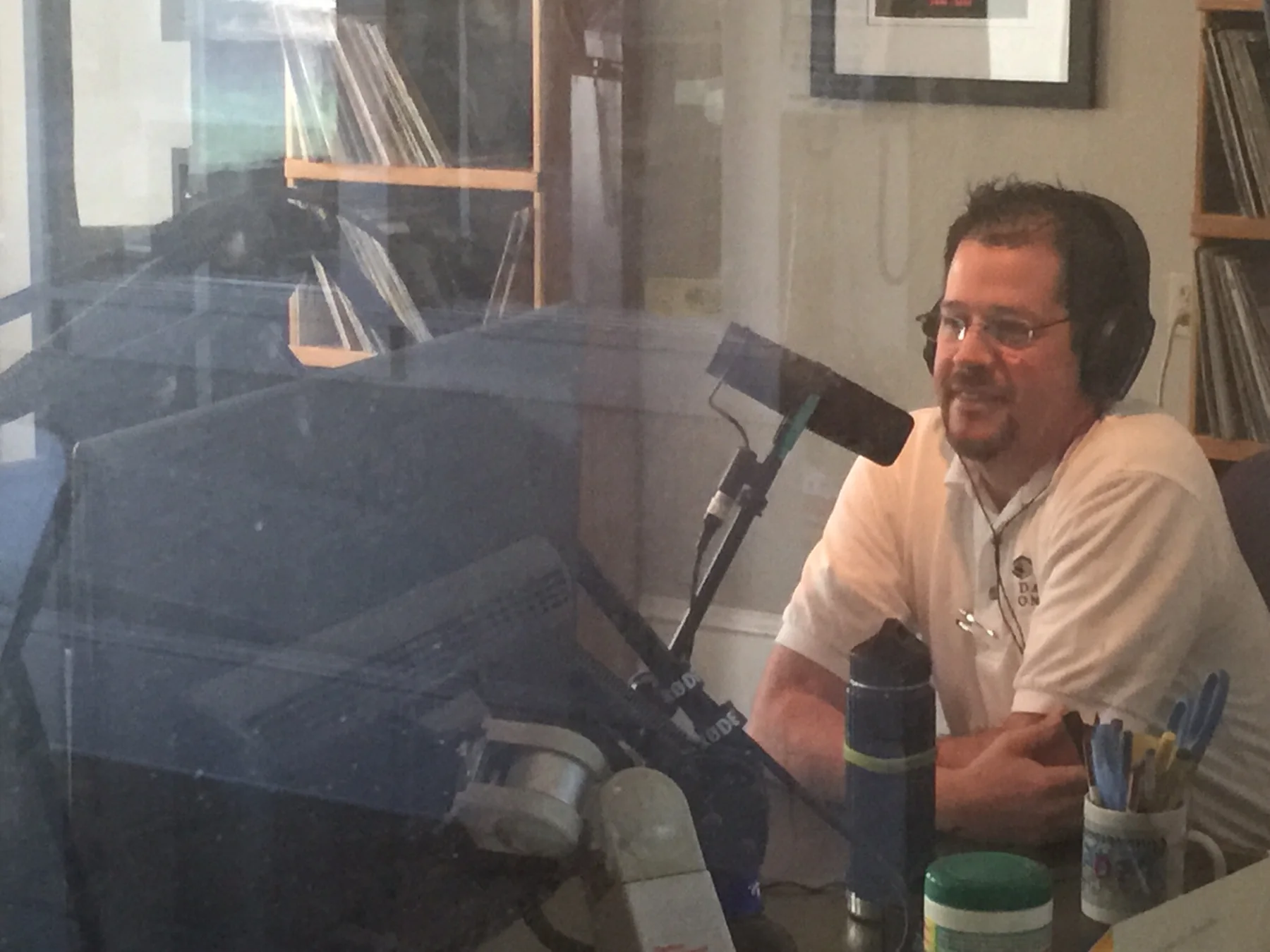
KZFR’s archive identifies the November 2, 2016 Without A Roof program with Chico Housing Action Team and Randall Stone, and the January 28, 2020 News You Can Use archive linking to Mayor Stone’s State of the City address.
Randall recalls that one archived KZFR appearance was made while holding his son Rhys. The exact clip pairing remains pending.
KZFR · Without A Roof · Nov. 2, 2016 →
KZFR · News You Can Use · Jan. 28, 2020 →
Permanent routes · print, NFC and social
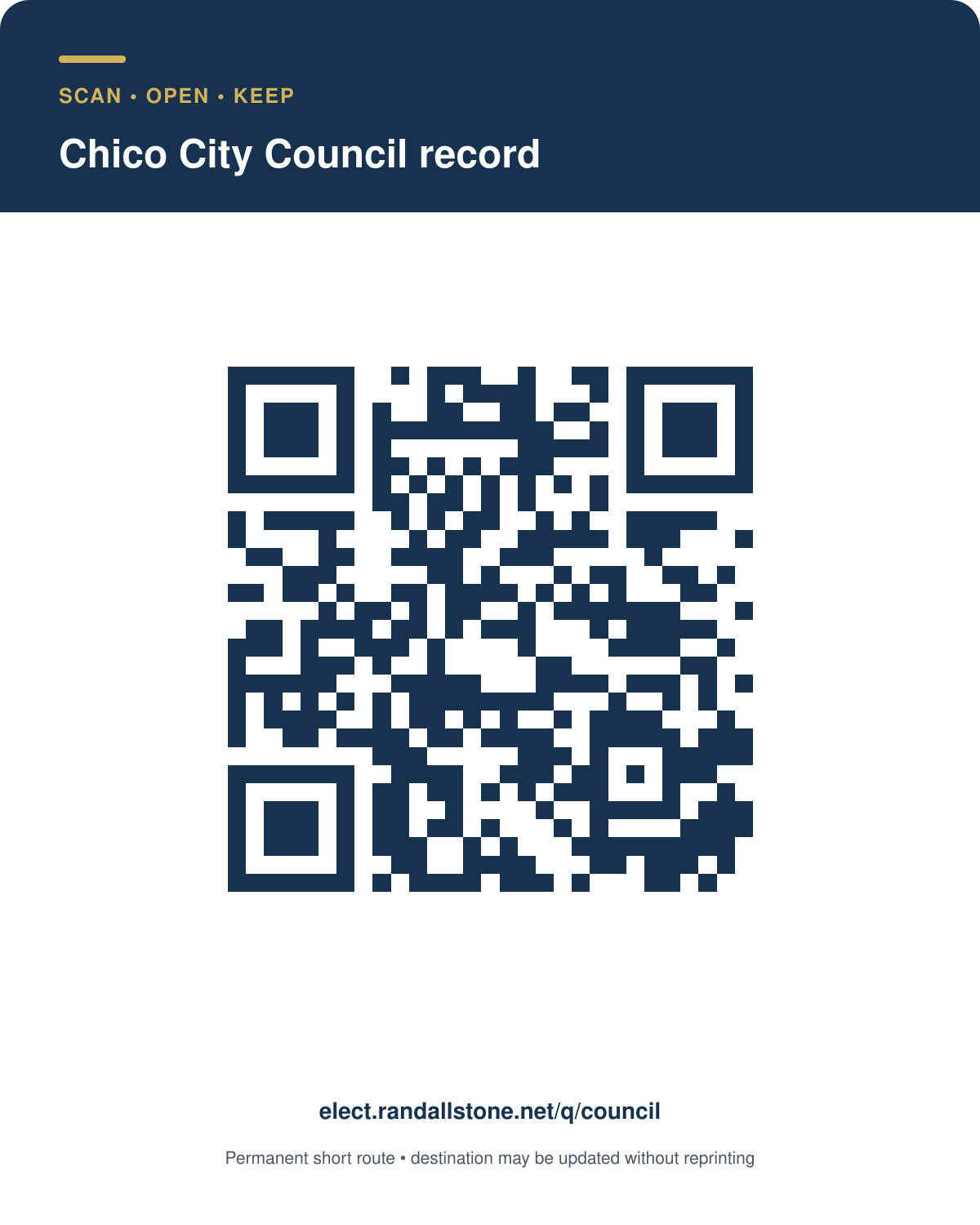
These short routes are permanent by design. The QR may live on a card, sign or NFC tag; its destination can change without reprinting the object.
Recovered local video
The clips below are historical archive material. The 2016 finance response was given without advance access to the forum questions. The 2008 television clip is preserved as local news coverage, with its broadcaster context intact.
An unscripted answer to a finance question during the 2016 reelection campaign.
Archived local television coverage from primary election night.